Education Day

By Karen Baker

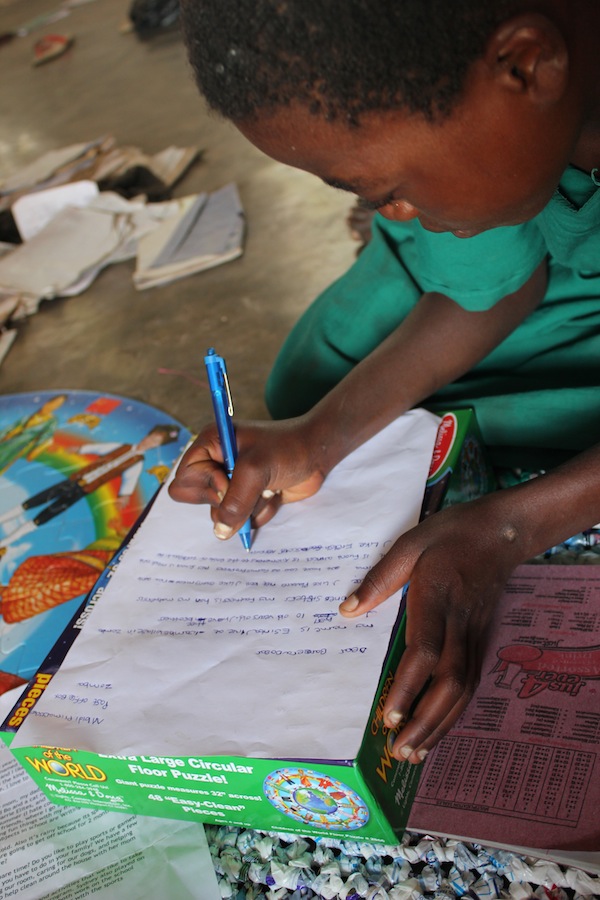
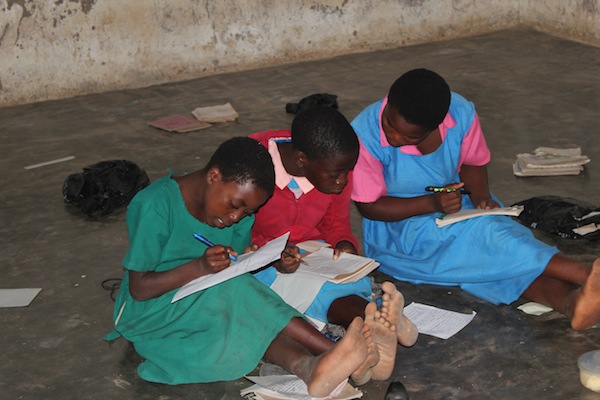
After other weekend adventures, Monday saw the team return to Mbidi School and our work activities. Splitting up, the group worked on painting (with colour this time), hanging classroom doors (after a 15 minute side trip enroute to the school to find a drill bit that cracked under the pressure shortly after it was put to work) and assisting the Standard 6 students to compose and correct pen pal letters that a team member had brought from a grade 8 class in Barrie, Ontario. Since you have already heard about how much we all love painting and working on fitting doors, we are going to focus on the education aspects of the day.

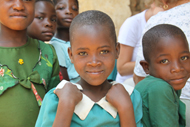
The four team members, Abi, Doug, Karen and Norma, who worked with the 32 Standard 6 students, broke into more manageable groups and took to sitting under the trees or in the classroom to get at the task at hand. Surprisingly, with little pre-planning, we all took the same approach. We read the student’s responses out loud so that they could all hear more English. We then confirmed facts such as pets (cats and dogs), siblings, parents (everyone had two), favourite school subjects (math, agriculture and writing were the winners), sports that included dancing, football and netball, and foods (surprise, surprise, the favourites were nsema (like a porridge that fills the belly), rice, chicken, potatoes and bananas). Just so you know we are trying to fit in, these have been the foods most frequently finding space on out plates.
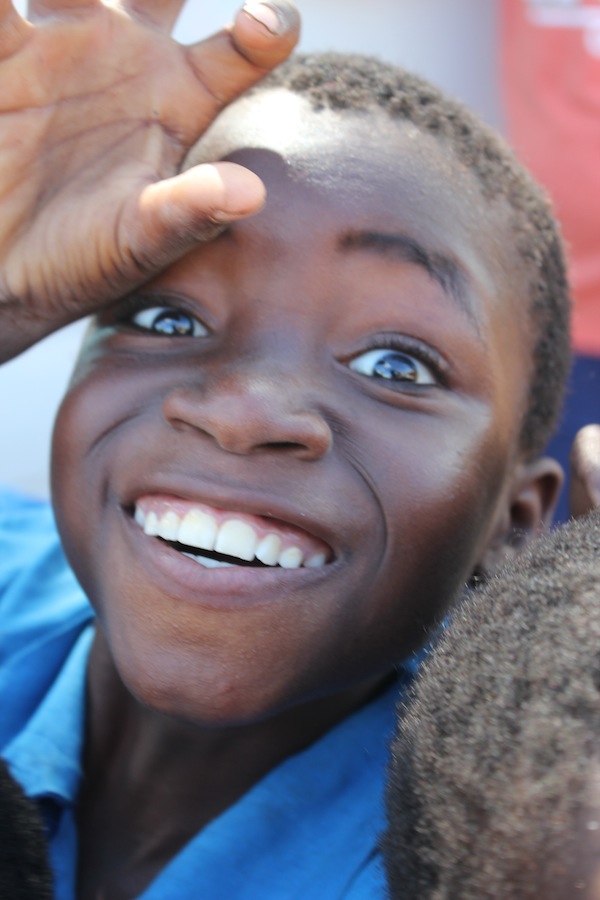
It would appear students here in Malawi are not a lot different than those at home, perhaps even for the same reason. As the letters were read, similar themes arose about how wonderful their teachers are, Miss Phiri and Alfred, the Almighty Flame of Africa; and their country of lakes, rivers, mountains and lush vegetation. It would appear there were one or two very good letter writers and the others used their work as the model to copy. We know however that the repetition was not for marks like at home but because the students wanted to show us how good their English was – and it was VERY good!
When the letter writing was complete, some members of the group pulled out some other teaching tools to use. Being proud Canadians, we pulled out the map to show them where we live relative to Malawi and explained that we had travelled about 12,000 kms by plane to visit with them, taking two days. We could see the lack of understanding the distance that 12,000 kms represents, but did appreciate their enthusiasm for our being there. We also had a map of Canada, and pictures of the RCMP, coins, Parliament, a Canada Goose and a Beaver to explain more about Canada. We left the best for last, Canada`s national obsession – ice hockey. That was a real challenge in a country that does not know cold, ice or play sports with sticks. We tried our best with some translation assistance from Miss Phiri.

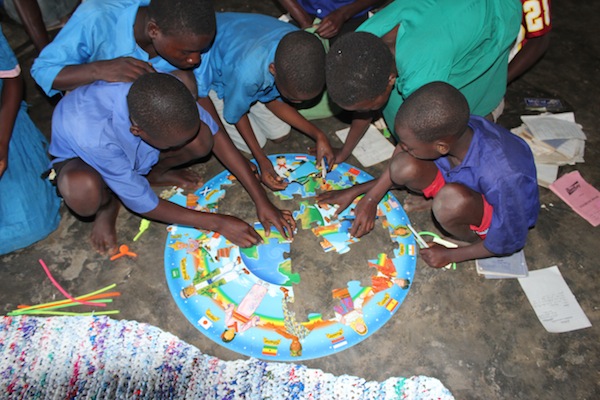
Once the Canada lesson was over, we turned to two final activities. We gave the students some pipe cleaners and they quickly began to make eyeglasses and doilies with them – it was fascinating to see the students make new colourful shapes and objects. And finally, we opened a `Children of the World` puzzle and led them through completing it. While the puzzle was only 48 pieces and round in shape, it was something they had not seen before and it took quite some time to get them to approach it in a logical fashion, but they did get it and were immensely proud of their accomplishment giving themselves a round of applause.
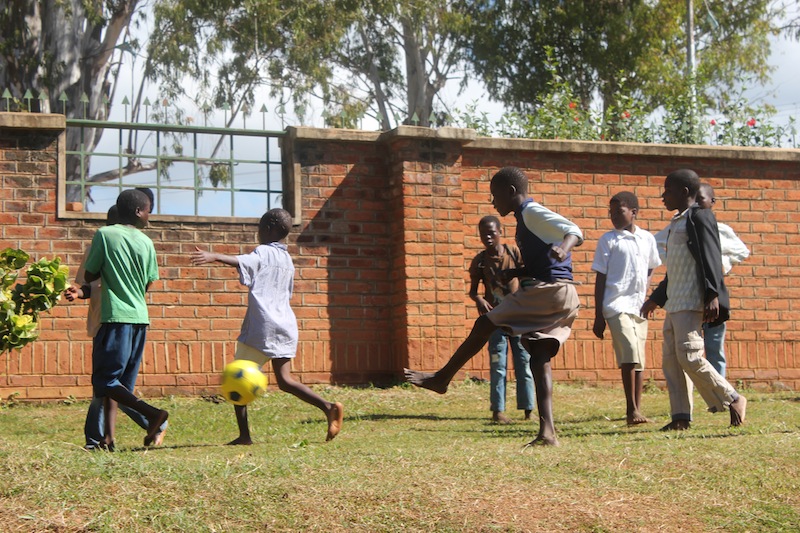
At break time, we pulled out some more goodies for the School – 4 sets of soccer uniforms which they will dress on Wednesday for a practice and then again the following week for an inter-school game. We are quite looking forward to the photos that we will get from these games. We also provided them with soccer balls (the new jerseys are not much good without some new balls to kick around), kites, skipping ropes and Frisbees. Unfortunately, by the time the official presentations and speeches were over the items we handed over had to be placed in storage as the school day had come to a close (1:30 pm, but they begin at 7:30 am).
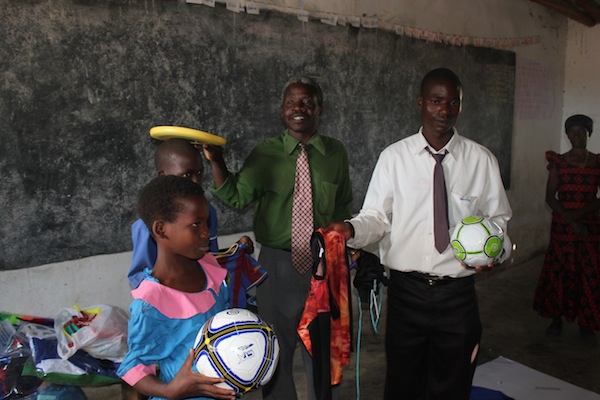
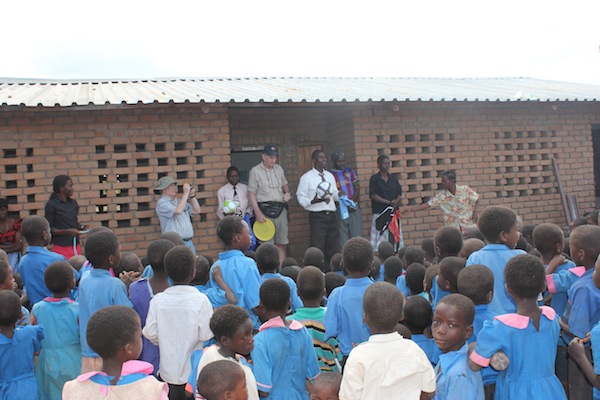
The end of students also meant the `teachers` had to return to the physical labour, with two picking up paintbrushes and two learning how to make some shelves for the principal`s office, under the tutelage of the team`s handyman, Andrew.

We packed it all up at 4 pm and returned to the Lodge, dropping off the local carpenter group on the way, to get ready for dinner and a presentation by Stephen Carr, a renowned African agriculturalist.

Our illustrious speaker did not disappoint. Stephen has an enormous wealth of knowledge and experience in Africa and its agricultural issues – single annual crop, 4 month rainy season, small yields from lack of fertilizer and an inability to generate an income from their crops. In fact, over 80% of Malawian farmers grow only enough food to feed their families. The result – no sales, no money and no way to get ahead. At the end of the day, there is no magic solution to Malawi’s agricultural problems and the future does not look any brighter living in a country whose population is growing by half a million a year. But do not despair, as we have seen, and Stephen stated this evening, poverty does not equate with misery and the people we have seen so far in our travels display no signs of misery – they are happy, they are proud and they are always laughing and smiling.

Til tomorrow…
Continue reading

Beauty and splendor

By Julie Dunaiskis

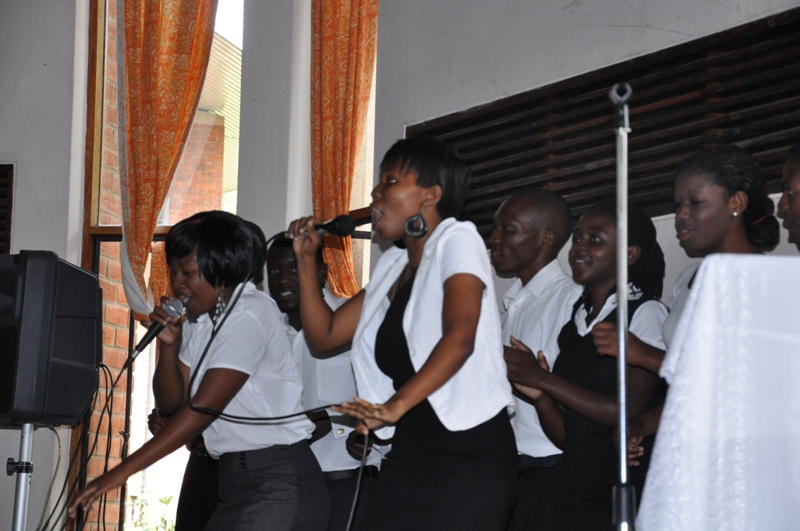
Our morning began with a very noisy wakeup call with the monkeys running along our roof and then proceeding to fight on our porch. They soon settled down and a few of us began the morning attending the Chancellor College Congregation church service at the university campus. The service began with 45 minutes of joyful singing and praising. What an emotional feeling and experience to see such excitement in the young people’s faces. The service concluded and the team then travelled up Zomba Mountain to have lunch at the Sunbird Hotel.

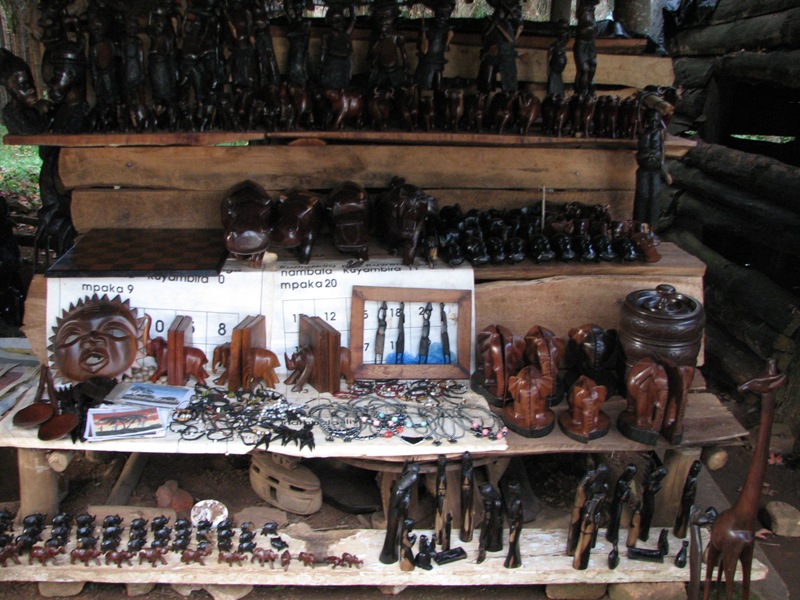
Before eating, we were given the opportunity to purchase wood carvings from local artisans. Along the road up the mountain, there were many people selling fresh raspberries, strawberries, guavas and potatoes. The hotel patio provided a spectacular view up about 5,500 ft. The meal was delicious even with bbq chicken and lamb. To work off all the calories, we then drove to William’s Waterfalls where some locals and visitors were enjoying the cold water. Just getting there gave us the opportunity to experience the local mountain roads – only one car width wide and many, many “potholes”. Thank goodness we didn’t meet many other cars until our downward drive. If we didn’t have whiplash before, we did now but Paul Jones was a wonderful driver despite the bone jarring jolts!
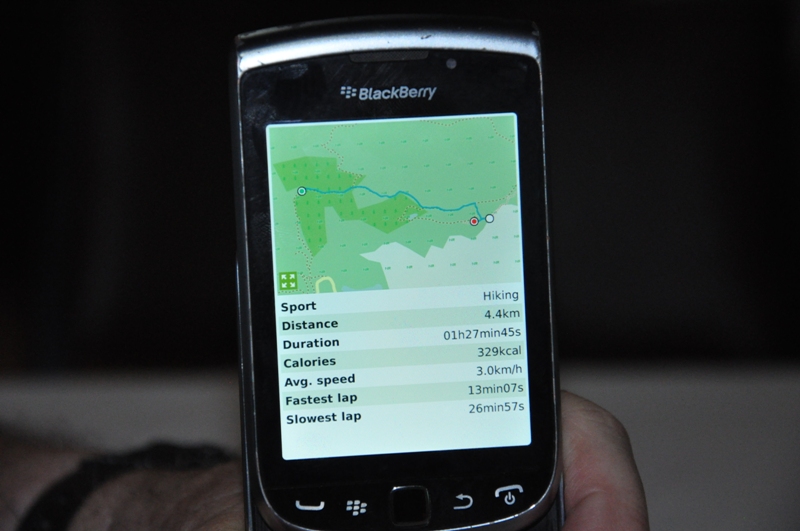
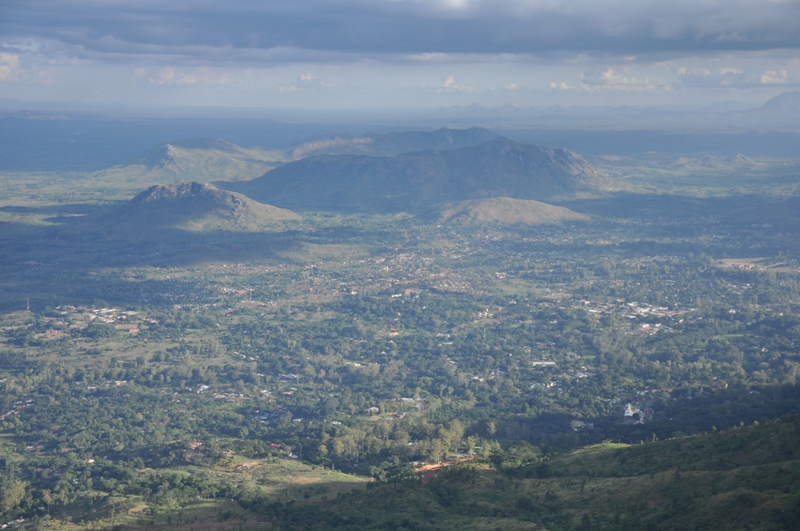
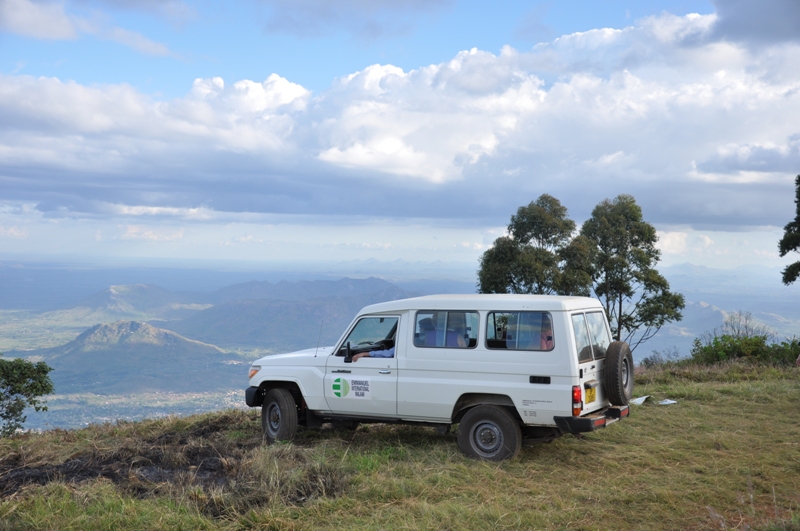
Several of the team, lead by Chris, decided to hike further up the mountain for a view of the Zomba Plateau. Along the way we saw the many sheets of pine lumber that was cut and ready to be taken down the mountain. After the short hike of only 4.4 km., we reached the Emperor’s View at around 6,500 ft. The “View” is named after Haile Selassie (Emperor of Ethiopia) visited in 1965. I felt like I was on top of the world and could see our hotel in the valley below along with the many surrounding mountains and island. The Zomba Plateau and surrounding mountains were absolutely breathtaking and I definitely did not want to leave. We then travelled to another point, the Queen’s View which was named after Queen Elizabeth paid a visit to the spot at one time. We got one last look at the spectacular view.

We were then treated to a presentation from Paul Jones and his wife Helen explaining Emmanuel International activities. They outlined their initiatives in health (nutrition, maternal-child, HIV/AIDS and water & sanitation), agriculture/irrigation, Village Savings & Loans, relief and education. We are very thankful we have such a great partner in our activities during this trip to Malawi.

Continue reading

Teen Time

By Abi Reid

Apparently in Malawi you still have to wake up early, if not even earlier, on the weekends. Complaining about getting up early you can perhaps tell, I am the lone teenager on the team; although if you were here you could have easily thought it was team member Norma complaining about our early call times. That is all I will say about myself or anyone else on the team, as I am sure that most of you reading this would rather hear about Malawi itself, along with its unique people.

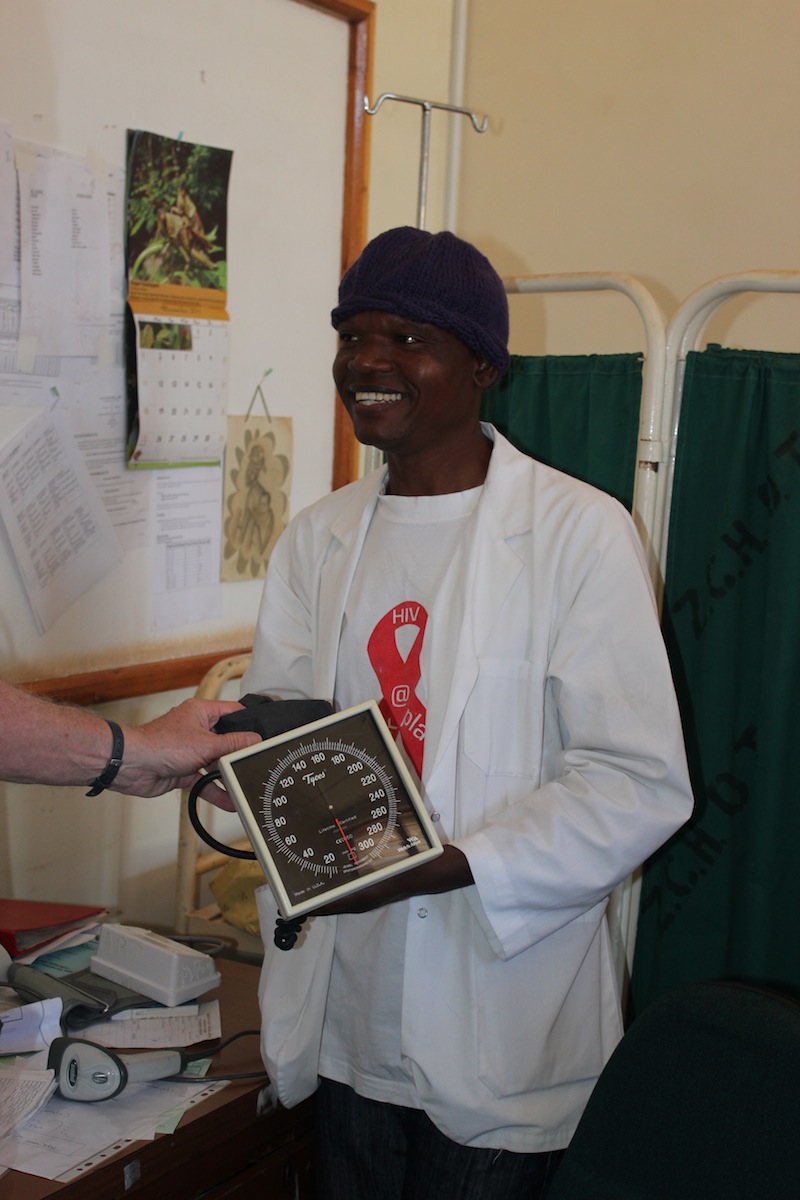
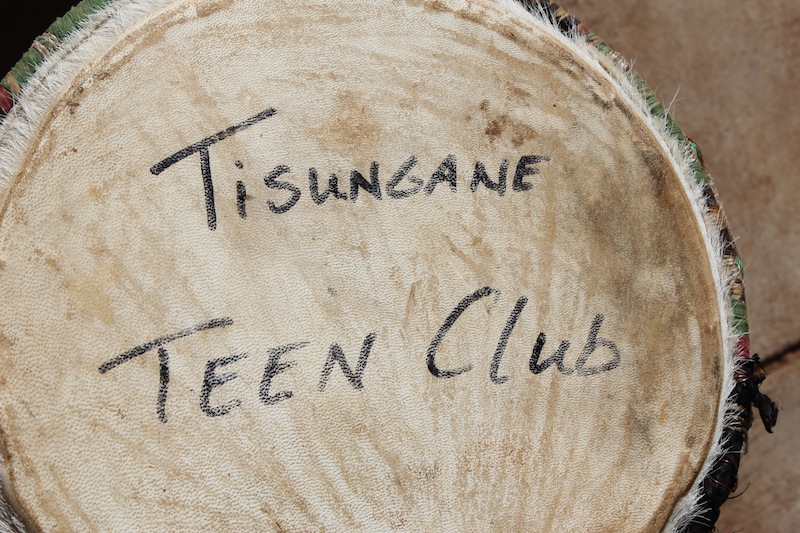
The major stop on today’s schedule is an HIV/AIDS clinic at the Central Zomba Hospital, where, as it is Saturday, the Tisungane Teen Clinic is taking place. We were met by Vanessa and Teferi from Dignitas, and Edson who explained the clinic’s intent to us.

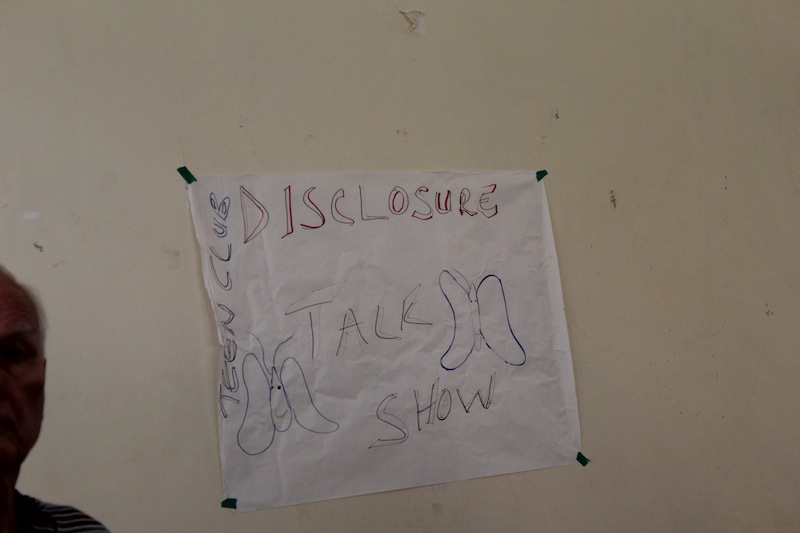
Around 80 HIV+ children and teens between the ages of 12 and 19 -although there were the occasional younger exceptions – were in attendance at the Clinic, which is not only a place to get weighed in and receive their needed medications, but also a safe environment to learn from the provided mentors and peers, as well as an opportunity to be open and disclose their own statuses. “Disclosure” was the focus of the day as it was the point of discussion amongst the large group. They talked about disclosure using a talk show format hosted by the “experts” (older mentors in the group in their late teens) that we were lucky enough to watch. The experts along with a few members of the audience discussed the pros and cons of disclosing their status, which was cut into segments much like television using live commercial breaks hosted by a younger boy who we could not understand, but received many laughs and a round of applause by his peers, so we will just assume that he is the group’s comedian.

Prior to their talk show, we were welcomed with a song showing the comparisons between a war fought in a battlefield and the war they are currently fighting in their bodies against the HIV virus. Shortly after, the teenagers were given some free time, which they used to meet with clinic counselors and then to enjoy a few pieces of sporting equipment we brought, such as soccer balls, Frisbees and skipping ropes. A soccer game broke out immediately behind their part of the hospital and lasted for the better part of an hour, while the other teens played Frisbee with some members of the Rotary team and showed off their jump rope skills, which I don’t think any of us could even come close to matching.

Following a couple speeches by the main mentor Natasha and a boy named Jack, where they told us -in very good English might I add- the basics of their stories. How they came to be diagnosed with HIV, when they started to understand what being HIV+ truly meant, how they’ve adapted to it and who they have and haven’t told were some of what they spoke about, but most importantly, they spoke about what they are planning to do in the future, because in reality, their opportunities are larger than the disease and as long as they continue to take their meds and lead healthy lives.

I know I said I wouldn’t write much about myself or the group, but as I am writing this a thought I’ve had all day sort of took hold. In more developed countries, North America especially, teenagers will judge and discriminate based on the smallest of things; what we wear, the music we listen to, even down to the way we put our hair back and because of this, teenagers at home are forced to lie and conform to try and fit in, but that is easier said than done depending on circumstance. Halfway around the world, the story is the same. The teenagers at Tisungane are dealing with situations many adults couldn’t even imagine. They are essentially forced to choose between disclosing this part of their life to the people around them and accepting that the reactions may not always be what they want or hiding their situation and having no one to lean on or understand what they are going through. Their diagnosis has held them hostage and they are slowly coming to realize that access to treatments such as ARVs and the counseling and support they receive at the Clinic, will set them free to live long and productive lives. It will be a long road but these teens are part of the movement to remove the stigma and discrimination attached to a positive test result.

We also went to lunch at an Italian restaurant, but I figured that wouldn’t be that interesting considering we have an abundance of those in Canada. It was a nice view though up in the mountains and lush greenery.

After lunch, the team split up to go to the market, return to the lodge or go check emails. We shall come together again for our evening meal and meeting and then begin another day soon enough.

Cheers from the warm heart of Africa!

Continue reading