It’s Official in Msaranga and Nganjoni! – by Roger Hayward

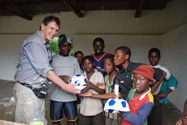
Today, January 20th, while the rest of the team is on safari, Steve Barg and his wife accompanied me to the official openings of the Msaranga and Ngonjoni health clinics which have been supplied with refurbished and reconditioned equipment.  This basic equipment is designed to reduce maternal and infant mortality (as it has done at the Kilema hospital) and to aid in the detection and treatment of disease.  This will help to reach the overall goal of World Health to improve the success of birthing so that baby deaths at birth in Tanzania are reduced to the same level as in North America.  Indeed, data taken over the last three years at the hospital shows that infant deaths are being reduced.

It was exceptionally gratifying to see that The Rotary Foundation Annual Programs Fund and our District 7070’s District Designated Funds have made this exciting initiative possible through the grant process.  Many community members from both villages attended the opening ceremonies, including the Deputy District Commissioner and the head of the DMO.  As well, Rotarians from the Kilema Kati and Moshi Rotary clubs were on hand to see the results of this part of the health-focused projects.

The opening of the Nganjoni clinic was especially welcomed because of its remote location serving over 7,000 people and because up until just recently there was no electricity at the clinic.  The installation of the electricity was made possible by the Moshi District Council, Mama Vivian and Sister Joanna, together with friends in the United States.  Soon it will be a fully-functioning clinic meeting the needs of this rural population.  The CEO of the Kilema hospital and Sister MatildaOLYMPUS DIGITAL CAMERA OLYMPUS DIGITAL CAMERA of the hospital staff were on hand for this opening; Sister Matilda will continue with the training of the medical personnel staffing the clinic so that the equipment can be used effectively.

While the three of us worked, the rest of the team relaxed on safari.  This just in – yesterday they saw zebras and the District Governor, Valarie, saw a lion.  Today the group added to their treasure of memories as they witnessed a leopard and two lionesses.

There will likely be more news, and some photos, when they return and  have more solid access to the internet…iffy at the best of times!

Continue reading

Touring the Projects – by Bill Wray

January 15, 2014

Wednesday was project tour day.  We loaded up the 2 jeeps and headed out with Cynoc and Joseph to visit the projects.

The first stop was the Mrereni water catchment project were the Rotary District 7070 funded a water tank that collects rain water for the garden and to provide drinking water for the students at the Mrereni Secondary School.  The tank is now connected to municipal drinking water as well so that it can be filled during the dry season.  The garden was being planted by a local Rotarian when we arrived.

We then travelled across country, a road we had not used in the past, to the Nganjoni health clinic.  We had a tour of the equipment that arrived in December.  The clinic looked to be in good shape.  Roger, Stephan and Judy will represent District 7070 at the official opening of the clinic next week.

We continued our journey across roads previously unseen to the Uparo health clinic to view the equipment we sent to them in June. Kate and Maria have not had much time in at this clinic, so we found a large portion of the shipment in storage.  The nurses will return on Thursday to assist in unpacking and organizing the clinic.

We then proceeded up the Kirua road which is currently under construction;  when complete it will lead to the new entrance gate to the Kilimanjaro National Park.  The road is being prepped for paving and is in good shape.  This project is being funded by the United States government.

The main group made a visit to the Kirua public health clinic while Roger and I visited the Kirua Catholic health clinic as some issues had been brought to our attention by the nursing team.  Repairs to the roof had been completed by the parish as promised but the ceilings in several rooms had not been repaired as requested and the clinic was not very clean.  The parish has been given a 3 week timeline to comply with the requests; the local Rotarians plan to relocate the equipment to other local clinics if the requests are not met.

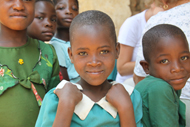
After lunch, the 2014 sweat equity team assisted the Kilema Primary teachers with the handing out of new school uniforms to the students.  This project was funded by the fundraising efforts of Meaghan Pickering, who came to Tanzania with last year’s group.  Upon her return in 2013, Meaghan approached her elementary school principal about raising funds at her school (she was in grade 8) and then conducted two fundraising events in the summer.  She was able to raise $5,900.00.  The children were very excited to receive their uniforms.  The funding of this project is ongoing, (any support is appreciated).  The first phase of the project supplied the poorest students at Kilema Primary.  Called “Clothe Kilema”, will ultimately be  a $15,000 USD project.  Kilema Primary has 362 students;  we supplied uniforms for 141 students in phase 1.

Wed. 2Wed. 3Wed. 4

Kate and students

Continue reading

Tanzanian Agriculture – by John Meek

January 14, 2014

As we drove from Moshi, we crossed a wide plain dotted with trees. It was reminiscent of what I imagined the Serengeti might look like. Cropping (sunflowers, corn, etc.) was over for the season and the vegetation sparse and brown. The land was strewn with crop residue suggesting a bountiful harvest.

As the elevation increased, the land greened until we reached our destination at Kilema with its deep verdant valleys and narrow switchback gravel roads; the actively growing crops returned. Corn, coffee and banana predominate in this fertile area at the 5,000 foot level. The kitchen gardens sprouted 6 foot high cabbage plants and there were several beautiful flower gardens cared for by the Sisters at the Kilema Hospital.

The “farms” in the area are small – two to five acres, which is common in much of Africa. I understand that there are much longer mechanized commercial farms on the lower plains, but for here, the hoe and the wheelbarrow are the only visible farm tools.

One of Rotary’s project was to restore a furrow “ditch”, one of ten that date back hundreds of years but that fell into disrepair with the collapse of world coffee prices. These furrows lead from a river further up Kilimanjaro and the crop response to the water (from the one restored furrow) is very evident. One of our tasks was to find an index or numerical indicator of success that would demonstrate the economic response to the Rotary and community investment in irrigation.

In our inspection of the response to the renovated furrow, the President of the Rotary Club of Kilema pointed out the success of new varieties of coffee and bananas that realize their potential with the new irrigation. The new variety of coffee plant lives fro 35 years (versus 100 for the old) but provides more than twice the yield. The new banana plant produces up to 10 times that of the traditional banana tree. We expect that these new cultivars and irrigation will encourage local farmers to innovate.

The soils on Kilimanjaro are of volcanic origin and appear coarse and open, but I understand that they can become hard in very dry weather. They appear to have some organic content but still benefit from incorporated organic material. We visited a test site where the production of humus is demonstrated and the results of its incorporation shown. Indeed, organic agriculture is practiced widely and crops rotated and interplanted; there is minimal animal agriculture in the immediate area.

Better cultivars and irrigation will combine to improve the welfare of this farming community. I strongly suspect that our performance indicators will dictate restoration of the remaining nine furrows in the future.

Continue reading